
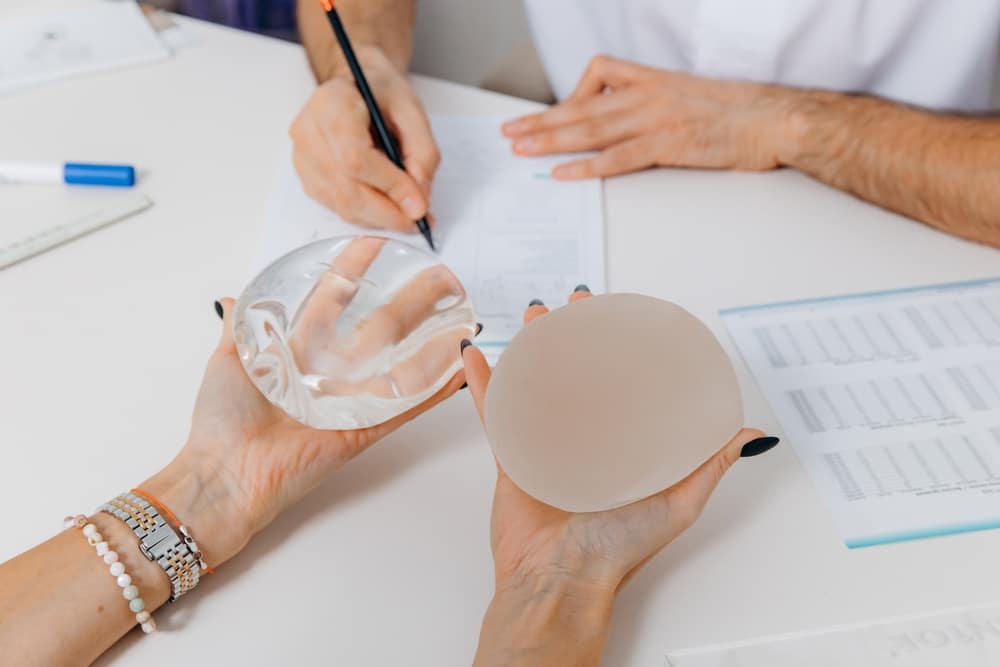
Breast implant revision may be appropriate when an implant ruptures, the surrounding scar capsule tightens, an implant moves out of position, the breast changes over time, or your preferences are no longer the same. Implants do not need to be replaced automatically at 10 years, and revision is not necessary if you remain satisfied and evaluation shows no problem.
Revision surgery is individualized because the implant, capsule, implant pocket, breast tissue, skin, and previous scars all affect the result. The goal may be to correct a complication, change implant size or type, improve breast shape, remove the implants, or combine several of these objectives.

Do Breast Implants Need to Be Replaced Every 10 Years?
No. Breast implants are not lifetime devices, but they do not expire on a fixed schedule. Many women keep the same implants longer than 10 years without a problem. Replacement is generally considered when there is a clinical concern, an imaging finding, or a personal reason to change them—not simply because a certain anniversary has passed.
Long-term follow-up remains important because the likelihood of rupture and other implant-related changes increases with time.
What Are Common Reasons for Breast Implant Revision?
Revision may be considered for:
- Rupture or deflation: A saline rupture usually causes visible deflation. A silicone gel rupture may be silent and discovered through imaging.
- Capsular contracture: The natural scar capsule around the implant becomes thicker or tighter, causing firmness, distortion, discomfort, or pain.
- Implant malposition: An implant moves too far toward the side, too low on the chest, or—less commonly—toward the center of the chest.
- Rippling or implant visibility: Implant edges or folds become visible or palpable, particularly when tissue coverage is thin.
- Muscle-related distortion: A submuscular implant changes shape or moves when the pectoralis muscle contracts.
- Changes in the breast: Pregnancy, weight change, aging, or tissue stretching alters the breast around an otherwise intact implant.
- A change in preference: You want a different size, projection, implant material, or no implant at all.
How Can You Tell Whether an Implant Has Ruptured?
Saline is absorbed harmlessly by the body after a rupture, so the affected breast usually becomes smaller as the implant deflates. A silicone gel rupture may cause no obvious change. In some cases, firmness, contour change, discomfort, swelling, or a new lump prompts evaluation.
For silicone gel implants, the FDA recommends ultrasound or MRI beginning five to six years after placement and every two to three years thereafter to screen for silent rupture. New symptoms or a change in the breast should be evaluated even if routine imaging is not yet due.
What Is Capsular Contracture?
Every implant develops a layer of scar tissue called a capsule. This is a normal healing response and does not mean the body is rejecting the implant. Capsular contracture occurs when the capsule becomes unusually thick or tight.
Mild cases may cause only firmness. More advanced contracture can push the implant higher, distort the breast, or become painful. Treatment depends on severity and duration. Significant cases may require removal of the abnormal capsule, implant exchange, and sometimes an acellular dermal matrix when contracture has recurred.
How Are Implant-Position Problems Corrected?
Treatment starts by identifying why the implant moved. Revision may involve tightening and rebuilding the implant pocket, restoring the fold beneath the breast, changing implant size, or changing the implant plane. Dr. Bogue has published research on the correction of synmastia, a difficult form of malposition in which the implant pockets extend too far toward the center of the chest.
For some patients with muscle-related movement or recurrent pocket problems, moving the implant from below the muscle to above it may provide a more stable result. The appropriate strategy depends on tissue thickness, implant size, capsule quality, and prior operations.
Can You Change Implant Size or Type?
Yes. Revision can exchange saline implants for silicone gel, change implant size or profile, or use a different gel cohesivity. Choosing a new implant requires reevaluating breast dimensions and tissue coverage rather than simply selecting a larger or smaller number of cubic centimeters.
You may also choose implant removal without replacement. The likely breast shape after removal depends on implant size, tissue volume, skin elasticity, and whether the breast has changed since the original augmentation.
Is a Breast Lift Always Needed With Revision?
No. A lift is useful only when the breast tissue and nipple also need to be repositioned. If the concern is limited to rupture, contracture, malposition, rippling, or implant preference and the breast tissue remains well positioned, a lift may not improve the result.
If the breast has stretched or dropped with pregnancy, weight change, or aging, a breast lift can be combined with revision. The aim is to correct only the problems that are actually present.
What Is Recovery Like After Breast Implant Revision?
Recovery depends on the extent of surgery. A straightforward implant exchange may be easier than a procedure involving capsulectomy, pocket reconstruction, biologic mesh, or a breast lift.
Activity is generally kept very light for the first two weeks, without exercise or heavy lifting. Around two weeks, most patients can begin cardio, light lifting, and full arm range of motion. A supportive or compression bra is typically worn around the clock for six weeks, after which most patients can return to unrestricted activity when cleared.
What Happens During a Revision Consultation?
Dr. Bogue evaluates the breast tissue, implant position, capsule, scars, asymmetry, and skin quality. He reviews the implant record and prior operative information when available and may recommend ultrasound or MRI if implant integrity is uncertain.
Revision is often more complex than first-time breast augmentation. A useful consultation separates an implant problem from a breast-tissue problem and explains which findings require correction, which are optional, and what tradeoffs accompany each approach.
Cosmetic surgical consultations are $100 and the fee is credited toward surgery when booked. Call 561-886-1000 or request a consultation online.