
Medically reviewed by David Bogue, MD, board-certified plastic surgeon.
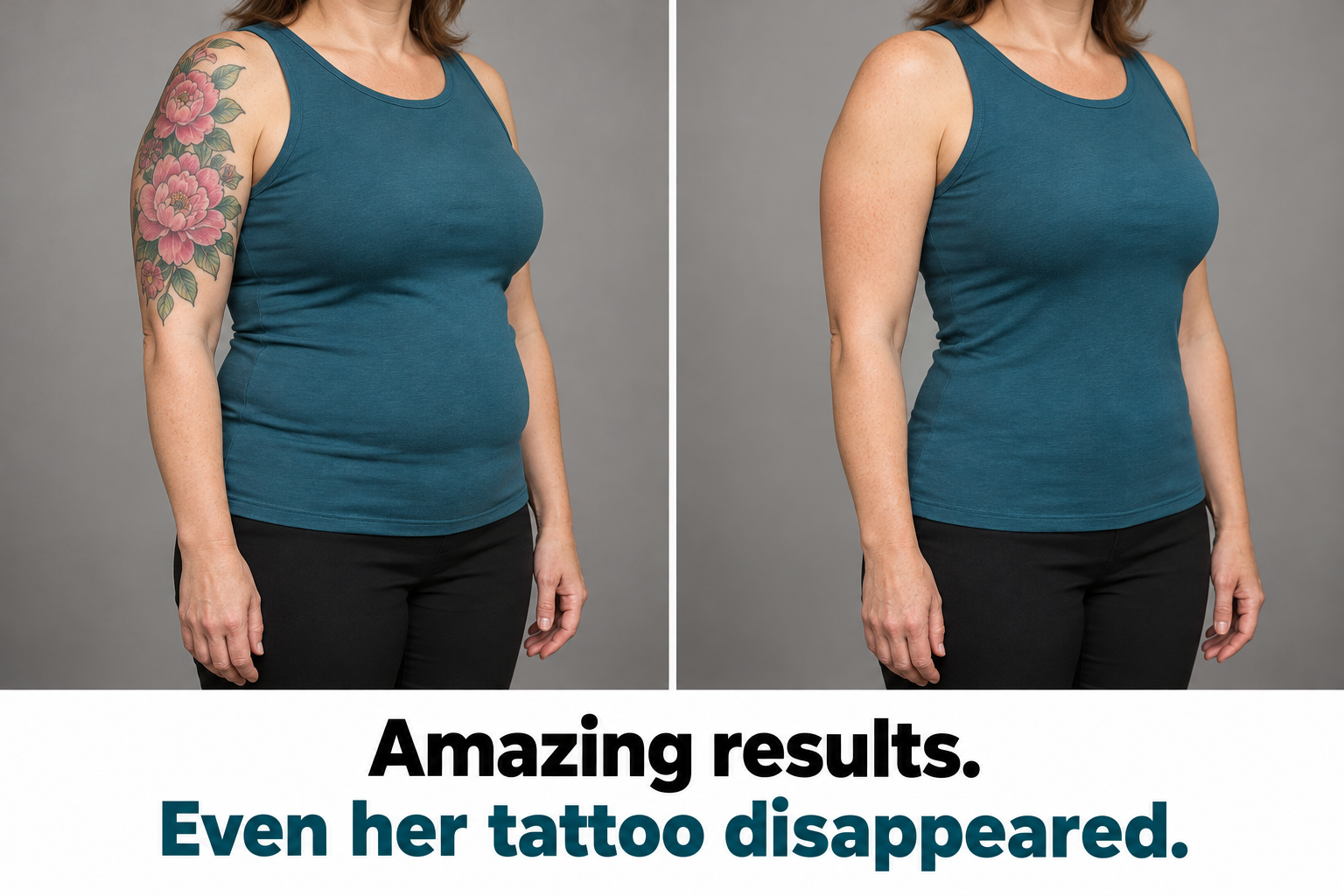
The abdomen looks flatter. The waist looks slimmer. And apparently, the tattoo has packed its bags and left.
That last part deserves a second look.
Our illustration is deliberately fictional, but the question behind it is real: when you browse a surgeon’s before-and-after photos, are you seeing a surgical result, a difference in presentation, or an image that has been altered?
You do not need to become a forensic photo analyst before scheduling a consultation. You do need a better strategy than “I love the after.”
Whether you are considering breast augmentation, a lift, reduction, implant revision or a tummy tuck, the goal is the same: use photographs to start an informed conversation—not to order someone else’s body from a picture.
Great surgery—or great software?
AI and editing tools can make a convincing photo harder to judge. But you do not need to inspect every pixel. Look beyond the standout “after”: does the surgeon show a range of patients and several views of each result?
That is a practical takeaway from a recent American Society of Plastic Surgeons discussion about AI and surgical photos. One odd detail does not prove a photo was altered—but a beautiful image should start a conversation, not end your research.
Look for comparable photos—not identical ones. Small differences in posture, lighting and framing are normal. The question is whether those differences make the surgical result easier to understand—or harder to judge fairly.
Check these details:
- Position and lighting: Could a dramatic pose or stronger shadows explain part of the change?
- Framing and clothing: Can you see the relevant area in both images, at a similar scale?
- Context: What procedures were performed, and when was the “after” taken?
Timing matters: swelling can affect early breast surgery photographs, and scars change as healing progresses. Ask what stage of recovery you are seeing.
Give the before photo some attention
The “after” usually gets the applause. The “before” deserves more of your attention.
If you save a photo to bring along, save the whole comparison, not just your favorite result. Note what appeals to you: a softer breast slope, less fullness or a more lifted shape. That gives your surgeon something more useful than “I want these.”
Try this sentence: “I like this part of the result. How does my starting anatomy change what is realistic for me?”
You are not looking for your body double. You are looking for a meaningful comparison.
Read breast photos according to the procedure
Breast augmentation is more than a size comparison
When browsing breast augmentation photos on the website, notice the overall shape and proportions—not simply which result looks largest. Think about the upper-breast fullness and profile you prefer, and ask what would fit your anatomy.
A photograph is a starting point for planning, not an implant prescription.
Breast lift photos need a little backstory
With breast lift results, ask whether the patient had a lift alone or a lift with implants. Those are different plans.
If you love a lifted result but do not want larger breasts, say so. “More lifted” and “more volume” are not interchangeable requests.
Breast reduction is not a smallest-size competition
For breast reduction, consider the shape you like and the concerns you want addressed. Your priorities might include heaviness, clothing fit, exercise discomfort or simply wanting smaller breasts.
A picture can show appearance. It cannot tell you whether that patient’s bra straps stopped digging in or whether the size would feel right on your frame. Those goals belong in the discussion, too.
Revision photos should explain what was being corrected
Breast implant revision can address very different concerns, including implant position, firmness, rippling or a change in size preference. An implant exchange is not the same operation as a more extensive pocket repair or revision with a lift.
Ask what the patient wanted changed and what treatment was performed. Otherwise, two attractive “after” photographs may be telling completely different stories.
What the tummy-tuck joke leaves out
Our fully clothed illustration makes the disappearing tattoo easy to spot. It does not let you assess a real abdominal result—and that is part of the point.
When reviewing actual tummy tuck photographs, ask about the lower-abdominal contour, scar placement, belly button and transition into the waist. Was liposuction also performed? What do the photographs leave covered? A smaller waist is not the whole story.
Make natural-looking mean something specific
“Natural-looking” is a useful goal, but it means different things to different people. One person wants a subtle change. Another wants more fullness while keeping proportions that feel balanced.
Try replacing the label with a description:
- “I want more fullness, but I do not want size to dominate my shape.”
- “I like this lifted appearance, but I would prefer less volume.”
- “I want a change that fits my frame and the clothes I enjoy wearing.”
Browse first, then bring your questions
Explore the website’s before-and-after gallery before your visit. If a particular result helps explain what you like—or raises a question—you are welcome to bring it along.
The consultation focuses on your anatomy, goals and treatment options. Useful questions include:
- What changes are realistic for my starting shape?
- Which procedure would best address my priorities, and why?
- What tradeoffs, scars and recovery should I understand?
- If I bring a photo, what about that result may or may not be achievable for me?
Choose a surgeon you can have this conversation with
If your search began with “best plastic surgeon Boca Raton,” let photographs help you build better questions—not make the entire decision for you. Consider verified training, relevant experience, surgical safety and how clearly the surgeon explains your options. Our guide to choosing a plastic surgeon covers those broader checks.
David Bogue, MD, is a board-certified plastic surgeon in Boca Raton whose practice emphasizes cosmetic and reconstructive breast surgery, including complex revision surgery, as well as body contouring.
Browse the before-and-after gallery on your own, then request a consultation to discuss your goals and treatment options. You do not need to bring photographs to have a productive conversation.
The best use of a gallery is not to find someone else’s body to copy. It is to help explain the change you want—and understand what is realistic for you.