

Stock Photo
Medically reviewed by David Bogue, MD, board-certified plastic surgeon.
A natural-looking belly button depends on more than where the opening is placed. Its depth, the small fold of skin at its upper edge and the pattern of the scar all influence its appearance. These details are part of Dr. Bogue’s tummy tuck planning—not an afterthought once the abdominal skin has been tightened.
Dr. Bogue uses an inferiorly based skin flap to create upper hooding and a horseshoe-shaped scar rather than a circular scar. The goal is a natural-looking navel that fits the surrounding abdomen. Your anatomy and healing influence the result; no particular shape or scar appearance can be guaranteed.
What happens to the belly button?
In a typical full tummy tuck, the belly button remains attached to the abdominal wall while it is freed from the surrounding skin. After that skin is repositioned, the navel is brought through a new opening. There is a scar at the navel as well as the separate lower abdominal scar, but the navel scar’s pattern depends on the technique. A mini tummy tuck addresses a more limited area and, in Dr. Bogue’s approach, does not require a belly-button incision. Read about full and mini tummy tucks.
Keeping the belly button’s underlying attachment and shaping the new skin opening are different parts of the operation. Ask your surgeon to explain both. A photograph can help you explain the features you like and discuss how they relate to your own anatomy.
Why Dr. Bogue uses a horseshoe-shaped scar
A circular scar can create a noticeable outline around the belly button. Dr. Bogue’s approach does not leave that closed ring. He uses an inferiorly based flap, meaning a small skin flap based at the lower part of the opening, to create hooding—a small overhang at the top of the navel—and a horseshoe-shaped scar.
This is an intentional detail of his tummy tuck technique. The goal is depth and a natural-looking upper contour without a closed ring of scar. The scar remains, and its visibility depends on healing.
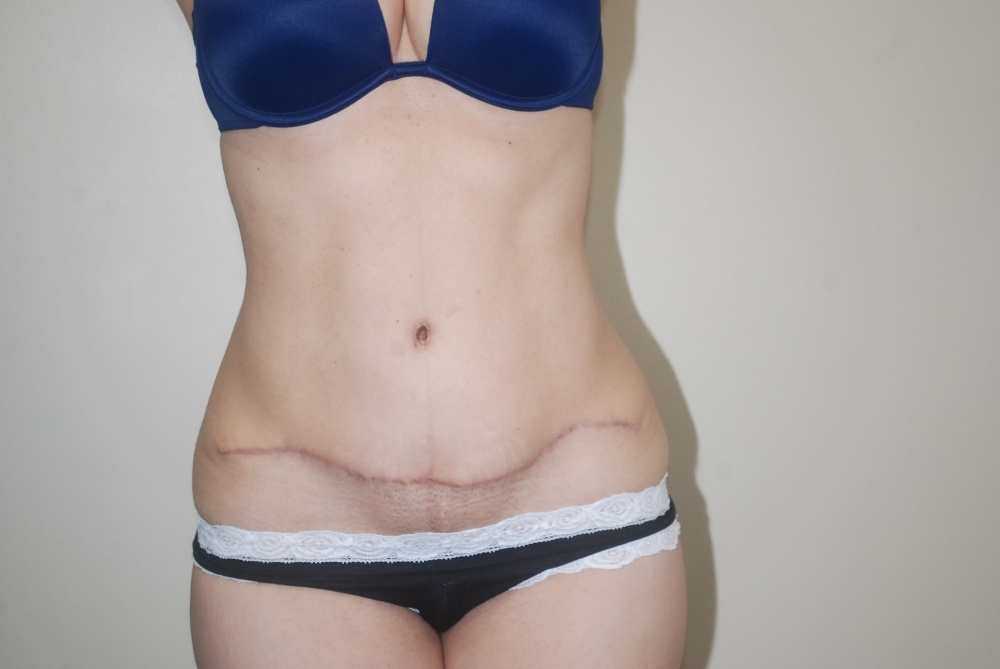
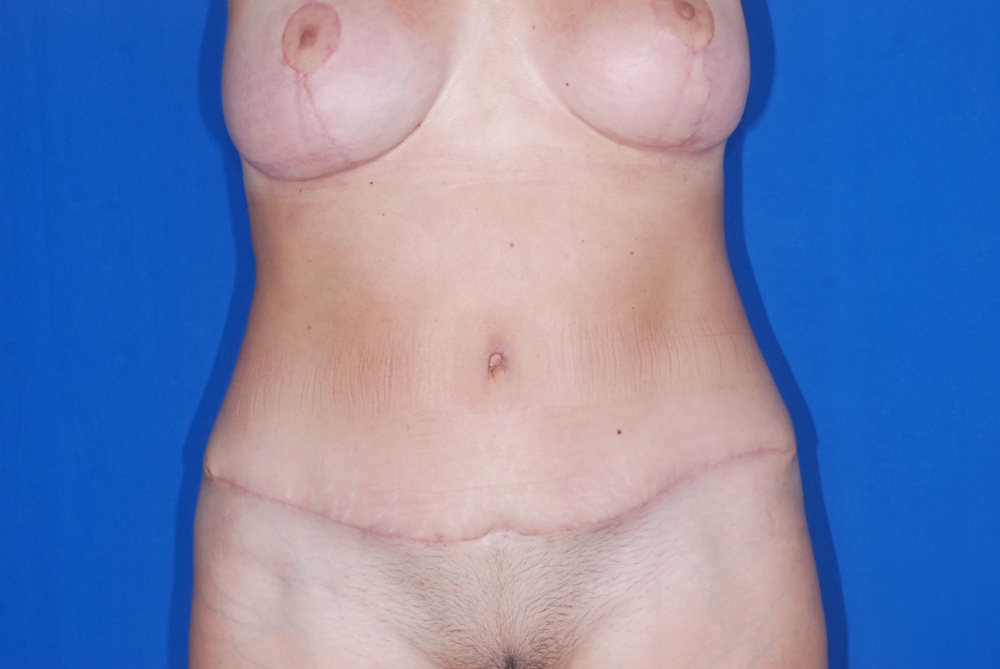
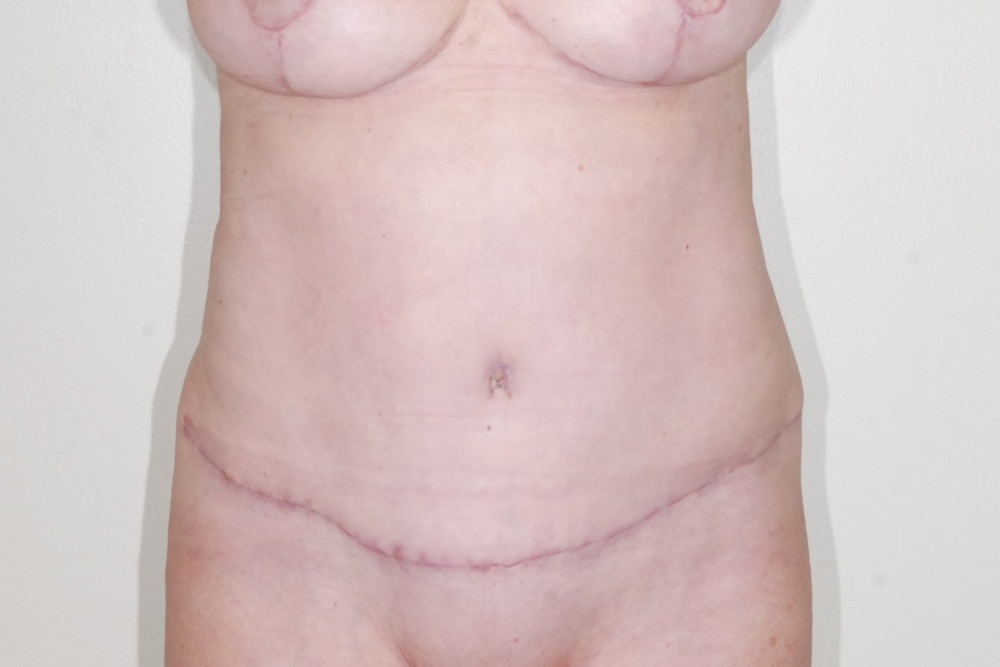
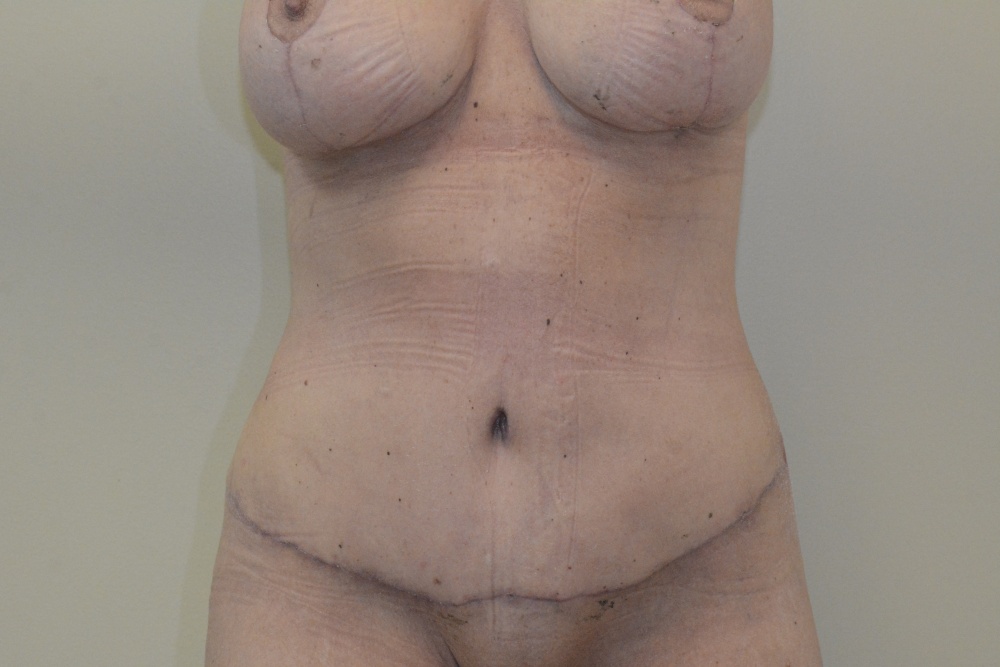
Front views of four patients after tummy tuck surgery with Dr. Bogue, showing differences in belly-button appearance and abdominal contour. Individual results vary.
View the full cases: Case 14 · Case 15 · Case 16 · Case 17
Where will the tummy tuck scar sit?
The long lower abdominal scar is separate from the scar at the belly button. Its length depends on the amount and distribution of skin being removed. A shorter incision is not automatically the better choice if it cannot address the area of loose skin. ASPS explains the general procedure steps.
During a consultation, ask where the proposed scar would lie in relation to your usual underwear or swimwear. Bring a photograph of the style you normally wear if that helps explain your preferences. Your anatomy and the procedure guide scar placement, so it is helpful to discuss clothing preferences before surgery.
It is also worth asking whether an existing abdominal scar could affect the plan. That conversation is more useful than comparing scar lengths without knowing the patients’ starting anatomy.
What makes a result look natural?
A natural-looking result is about how the abdomen, waist and navel work together. The aim is a contour that fits your proportions, with realistic expectations for symmetry and scars.
Dr. Bogue’s tummy tuck approach considers the lower incision, belly-button appearance and transition into the waist and hips as parts of the overall plan. At a consultation, ask how your skin, existing scars and abdominal-wall findings affect those decisions. Full and mini tummy tucks are different operations with different limits; the smaller operation is not necessarily appropriate for the changes you want.
How to look at before-and-after photographs
When reviewing tummy tuck before-and-after cases, ask which patients had a similar starting shape and a comparable operation.
Look beyond the front view. Notice how the abdomen meets the waist, where the lower scar sits and how the navel looks from different angles. Ask how long after surgery the photographs were taken. Clothing, lighting, posture and the stage of healing can change what you see.
You can also ask to discuss examples where healing took longer or a scar needed additional treatment. An open conversation about limitations is part of evaluating a surgeon’s approach.
Scars need time and individualized care
Tummy-tuck scars are permanent, although their appearance can change substantially as they mature. Early swelling and a relatively new scar are not the final result. ASPS notes that scars can take several months to a year to fade as much as they will. Read ASPS’s guidance on tummy-tuck results and scar maturation.
Follow your own surgeon’s instructions for incision care, activity and follow-up. Ask when it is appropriate to begin scar care, including whether silicone products or sun protection are suitable for your stage of healing. Do not start a treatment on an unhealed incision without clearance. ASPS discusses scar-care options and the importance of following postoperative instructions.
Scarring is only one part of the decision. Tummy tuck surgery also carries risks such as bleeding, infection, fluid collection, poor wound healing, altered sensation and blood clots; additional surgery may sometimes be needed. These and other risks should be reviewed alongside the expected benefits. See ASPS’s tummy-tuck safety information.
Choosing a surgeon for your goals
When comparing options for a plastic surgeon in Boca Raton, consider American Board of Plastic Surgery certification, experience with the operation you are considering, relevant before-and-after cases and a clear discussion of risks and follow-up. The best fit for your goals is not established by a “best surgeon” label alone. Our guide to choosing a plastic surgeon explains these patient-selection considerations.
At a consultation with Dr. Bogue, bring your questions about scar placement, belly-button shape and the changes that matter most to you. Request a consultation to discuss your goals, surgical options and recovery.